
Home Remedies for a Teething Baby at Night



Teething can be a challenging time for babies and parents, especially when discomfort becomes worse at night. Sore gums, increased fussiness, drooling, and a strong urge to chew can make it difficult for a baby to settle and sleep. Fortunately, several gentle home remedies can help soothe teething discomfort and create a more comfortable bedtime routine.
Why Teething Can Be Worse at Night
During the day, babies have plenty of distractions, but nighttime is quieter, making discomfort more noticeable. Lying down may also make a baby more aware of pressure or soreness in the gums. Understanding this can help parents focus on safe comfort measures rather than reaching for potentially harmful products.
Safe Home Remedies for Nighttime Teething
1. Gently Massage the Gums
Wash your hands thoroughly and use a clean finger to gently massage your baby’s gums. Light pressure can provide soothing counterpressure against tender areas. Keep the massage gentle and stop if your baby becomes more uncomfortable.
2. Offer a Chilled Teething Ring
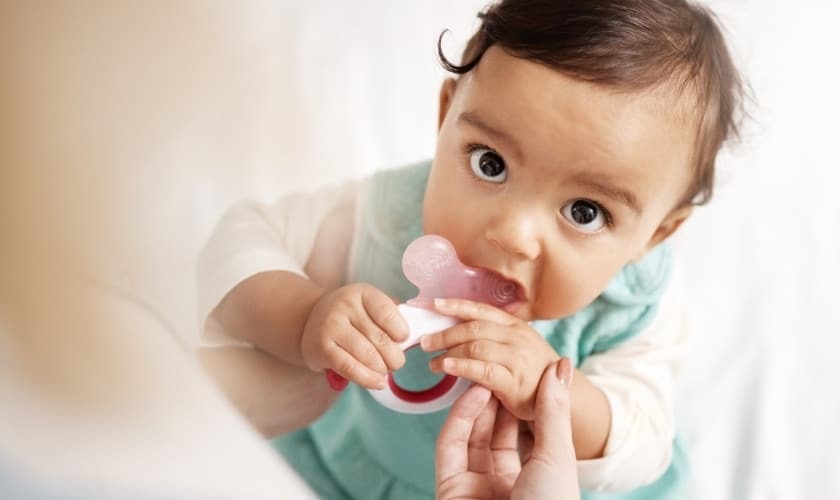
A teething ring cooled in the refrigerator can provide temporary relief by soothing irritated gums. Avoid freezing teething rings because extremely cold surfaces can hurt delicate gum tissue. Always choose an age-appropriate product and supervise your baby while using it.
3. Use a Cool, Clean Washcloth
Dampen a clean washcloth, chill it in the refrigerator, and let your baby gently chew on it while supervised. The cool fabric can help calm sore gums while giving your baby something safe to bite.
4. Provide Extra Comfort at Bedtime
Cuddling, rocking, gentle singing, or maintaining a familiar bedtime routine may help a teething baby relax. Keeping the room quiet and comfortable can also make it easier for your baby to settle after experiencing gum discomfort.
5. Keep the Face Dry
Excessive drooling is common during teething and can irritate the skin around the mouth and chin. Gently wipe away drool with a soft cloth and avoid vigorous rubbing. Keeping the skin dry can prevent additional irritation from making nighttime fussiness worse.
6. Avoid Unsafe Teething Remedies
Parents should avoid teething necklaces, bracelets, unapproved gels, alcohol-based remedies, and anything that could create a choking or strangulation risk. Never give a baby medication or topical treatment unless it is appropriate for their age and recommended by a pediatric healthcare professional.
When Should Parents Call a Dentist?
Teething can cause temporary discomfort, but it should not automatically be blamed for symptoms such as a high fever, significant swelling, persistent diarrhea, difficulty breathing, or a baby who appears seriously ill. These symptoms may have another cause and deserve prompt medical attention.
For questions about your child’s oral health and developing teeth, Sturz & Abby Pediatric Dentistry and Orthodontics can provide age-appropriate guidance and help parents understand what is normal during different stages of development.
Helping Your Baby Sleep During Teething
A consistent bedtime routine can be especially useful when teething interrupts sleep. Begin with calming activities, offer a safe chilled teething option, gently massage the gums, and provide reassurance. Avoid introducing several new remedies at once, so you can determine what comforts your baby most effectively.
If nighttime discomfort continues or you are uncertain whether your baby’s symptoms are related to teething, Contact Us for professional guidance. A pediatric dental evaluation can help identify whether another oral-health concern may be contributing to your baby’s discomfort.
Building Healthy Oral Habits Early
Teething is also an important time to begin establishing healthy oral-care habits. Before teeth appear, parents can gently wipe the baby’s gums with a clean, damp cloth. Once the first tooth emerges, brushing with an age-appropriate amount of fluoride toothpaste becomes part of the daily routine.
Parents can also visit our dental office for guidance on infant oral hygiene, early dental visits, and ways to protect newly developing teeth. Starting good habits early can help support healthy teeth and gums as your child grows.
Frequently Asked Questions
- What is the best home remedy for a teething baby at night?
A chilled teething ring, cool washcloth, gentle gum massage, and extra cuddling can provide temporary comfort. Always supervise chewing and avoid frozen items or unsafe teething products.
- Can I give my teething baby a frozen washcloth?
It is safer to offer a cool, refrigerated washcloth rather than a frozen one. Extremely cold materials may be uncomfortable or potentially damage delicate gum tissue.
- Does teething cause babies to wake up at night?
Teething discomfort can make some babies fussier or wake more frequently. A soothing bedtime routine, gentle gum massage, and safe cooling measures may help them become more comfortable.
- Should teething babies use numbing gels?
Parents should avoid using teething gels unless specifically advised by a qualified healthcare professional. Some ingredients may be unsuitable for infants and can cause serious side effects.
- Are teething necklaces safe for babies?
Teething necklaces are not recommended because they can create choking or strangulation hazards. Safer options include supervised use of age-appropriate teething toys and cool washcloths.
- How can I soothe sore gums before bedtime?
Try gently massaging the gums with a clean finger, offering a refrigerated teething ring, and providing calm cuddling. Keeping the bedtime routine predictable may also help your baby relax.
- When should teething symptoms concern parents?
Persistent high fever, significant swelling, breathing difficulty, severe illness, or unusual symptoms should not simply be attributed to teething. Such signs may require prompt evaluation by a healthcare professional.