
Safe and Effective Home Remedies for Baby Teething Pain




Teething is an important milestone in your baby’s development, but it can also be a challenging time for both babies and parents. As those tiny teeth begin to push through the gums, babies often experience discomfort, irritability, drooling, and sleepless nights. Many parents look for baby teething remedies that are safe, gentle, and effective without immediately relying on medication.
The good news is that there are several proven home remedies that can help soothe your baby’s teething pain naturally. In this detailed guide, we’ll explore trusted methods, safety tips, and nighttime solutions to help your little one feel more comfortable during this phase.
Understanding Baby Teething Pain
Most babies start teething between 4 and 7 months, although some may begin earlier or later. Common signs of teething include:
- Swollen or tender gums
- Excessive drooling
- Chewing on hands or objects
- Fussiness or irritability
- Trouble sleeping, especially at night
- Slight increase in body temperature (not a fever)
Teething discomfort can come and go, often worsening at night when distractions are fewer. This is why parents often search for remedies for a teething baby at night to help everyone get some rest.
Why Choose Home Remedies for Teething?
Home remedies are popular because they are:
- Natural and gentle on a baby’s sensitive gums
- Cost-effective and easily available
- Low risk when used correctly
- Comfort-focused, helping babies feel secure and calm
While severe pain or symptoms should always be discussed with a healthcare professional, mild to moderate teething discomfort can often be managed at home.
Safe and Effective Home Remedies for Baby Teething Pain
1. Clean Finger Gum Massage
One of the simplest and most effective remedies is gently massaging your baby’s gums.
How it helps:
Pressure counteracts the sensation of teeth pushing through the gums, providing temporary relief.
How to do it safely:
- Wash your hands thoroughly
- Use a clean finger
- Gently rub your baby’s gums in circular motions
This method is especially useful before bedtime and can be one of the easiest remedies for a teething baby when your child is very young.
2. Cold (Not Frozen) Teething Objects
Cold temperatures can numb sore gums and reduce inflammation.
Safe options include:
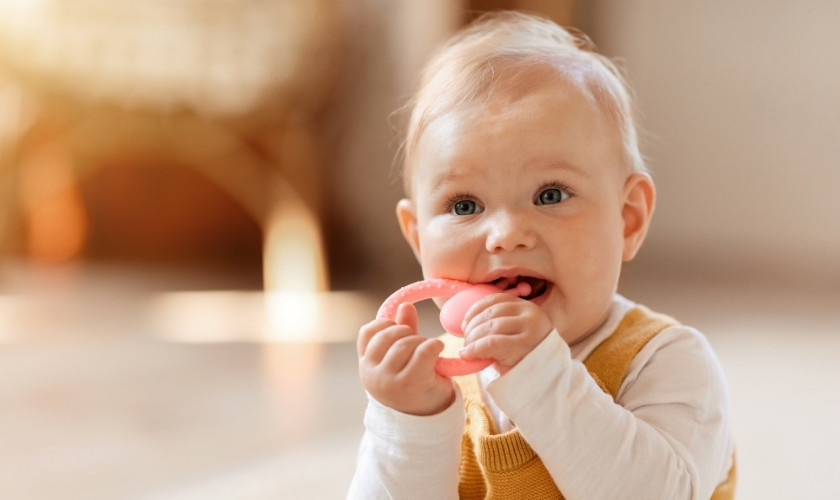
- Chilled (not frozen) teething rings
- A clean, cold washcloth
- Silicone teething toys cooled in the refrigerator
Important safety tip:
Never give frozen objects, as extreme cold can damage delicate gum tissue.
3. Cold Washcloth Chewing
A clean washcloth soaked in water and chilled in the fridge can be surprisingly effective.
Why it works:
- Cold helps soothe gums
- The texture provides gentle pressure
Tie a knot in the washcloth for easier chewing, and always supervise your baby while using this method.
4. Extra Cuddles and Comfort
Teething pain isn’t just physical—it can also make babies feel unsettled.
Comforting techniques include:
- Rocking or holding your baby
- Soft singing or humming
- Calm, quiet play
Emotional reassurance can significantly reduce fussiness and help babies relax, particularly during nighttime discomfort.
5. Breastfeeding or Bottle Feeding for Comfort
Sucking can be soothing for babies.
How it helps:
- Provides comfort and familiarity
- Helps babies calm down during painful episodes
If breastfeeding, be aware that some babies may bite during teething. Bottle-fed babies may also enjoy the soothing effect, but avoid letting them sleep with a bottle to prevent future dental issues.
6. Distraction Through Play
Sometimes the best remedy is distraction.
Effective distractions include:
- Reading a colorful book
- Playing gentle music
- Engaging with safe toys
This technique works best during daytime teething discomfort and helps reduce focus on pain.
7. Safe Natural Teething Gels (With Caution)
Some parents choose herbal or natural teething gels.
What to know:
- Avoid gels with benzocaine or lidocaine
- Use only pediatrician-approved products
- Follow dosage instructions carefully
Always consult a healthcare professional before introducing any gel or remedy.
Remedies for a Teething Baby at Night
Nighttime teething pain can be especially difficult because babies have fewer distractions and are more aware of their discomfort. As a result, teething often leads to frequent night waking, crying, and disrupted sleep for the whole family. Using gentle and consistent nighttime strategies can make a significant difference.
Establish a Calming Bedtime Routine
A predictable bedtime routine helps signal to your baby’s body that it’s time to sleep. A warm bath, gentle rocking, soft music, or quiet cuddling can relax your baby and reduce restlessness caused by sore gums.
Use Chilled Teethers Before Bed
Offering a clean, chilled (not frozen) teething ring shortly before bedtime can help numb gum discomfort. The cooling sensation combined with gentle pressure may provide enough relief for your baby to settle more easily into sleep.
Gentle Gum Massage
Before putting your baby down, gently massage their gums with a clean finger. This simple technique helps relieve pressure and can be especially soothing when teeth are close to breaking through.
Extra Comfort and Reassurance
Teething babies often wake at night seeking comfort. Picking them up, holding them close, or softly speaking to them can help them feel secure. Emotional reassurance is just as important as physical relief during nighttime teething episodes.
Maintain a Comfortable Sleep Environment
Ensure the room is cool, quiet, and dimly lit. A calm environment minimizes stimulation and makes it easier for your baby to return to sleep after waking due to teething pain.
Avoid New Foods or Remedies at Night
Nighttime is not the best time to introduce new teething products or foods, as they may upset your baby’s stomach or cause discomfort. Stick to familiar and trusted remedies to avoid unnecessary sleep disruptions.
What to Avoid During Teething
While teething is a normal part of your baby’s development, certain remedies and practices can be unsafe or ineffective. Knowing what to avoid is just as important as choosing the right teething solutions.
Avoid Amber Teething Necklaces
Amber necklaces are often marketed as natural pain relievers, but they pose serious choking and strangulation risks. Babies should never wear necklaces, bracelets, or anklets—especially during sleep.
Avoid Teething Gels with Numbing Agents
Over-the-counter teething gels containing benzocaine or lidocaine can be harmful to infants. These ingredients may cause serious side effects and are not recommended for babies.
Avoid Frozen Teething Items
While cold can soothe sore gums, frozen teethers or ice-cold objects can damage sensitive gum tissue and increase discomfort. Always use chilled, not frozen, teething tools.
Avoid Homeopathic Tablets and Unverified Remedies
Some homeopathic teething products have been recalled due to unsafe ingredients. Avoid remedies that are not pediatrician-approved or clearly labeled for infant use.
Avoid Rubbing Alcohol or Herbal Oils on Gums
Alcohol-based solutions or essential oils should never be applied to a baby’s gums. These substances can irritate the mouth and may be toxic if swallowed.
Avoid Letting Babies Sleep with Bottles
Allowing a baby to fall asleep with a bottle can increase the risk of tooth decay once teeth begin to emerge. Comfort feeding is fine, but bottles should be removed before sleep.
Avoid Ignoring Severe Symptoms
Teething should not cause high fever, severe diarrhea, vomiting, or extreme irritability. If these symptoms occur, consult a healthcare professional to rule out other medical concerns.
When to Seek Professional Help
Mild discomfort is normal during teething, but if your baby shows any of the following symptoms, contact your pediatrician immediately:
- Persistent high fever (above 101°F or 38°C)
- Severe irritability or inconsolable crying
- Refusal to feed or drink
- Rash, vomiting, or diarrhea
- Signs of infection (swelling, pus, or bleeding around gums)
If you notice any dental abnormalities or tooth eruption issues, it’s a good idea to visit our dental office for personalized guidance on caring for your baby’s oral health. You can also search for urgent dental care near you if your child seems to be in severe pain or has a visible gum infection.
Long-Term Teething Care Tips for Parents
Once teething begins, it’s never too early to build good oral hygiene habits. Here are a few long-term practices that protect your child’s teeth and gums:
- Clean gums gently after every feeding using a soft, damp cloth before the first tooth appears.
- Switch to a baby-size toothbrush and use fluoride toothpaste (a rice-grain-sized amount) once the first tooth erupts.
- Avoid putting your baby to bed with a bottle, as prolonged contact with milk or juice can cause early tooth decay.
- Schedule the first dental visit by the time your baby turns one year old or when the first tooth appears.
By establishing these habits early, you set the foundation for a lifetime of healthy smiles.
Frequently Asked Questions
1. How long does teething pain last for each tooth?
Teething discomfort can start a few days before the tooth breaks through and may last about a week per tooth. However, the intensity and duration can vary with each baby.
2. Can I use pain-relief gels or medications for my teething baby?
Avoid over-the-counter teething gels containing benzocaine or lidocaine, as they can harm your baby. Always consult your pediatrician before using medicines.
3. Is it normal for my baby to have diarrhea during teething?
While teething itself doesn’t cause diarrhea, increased drooling and hand-to-mouth activity can introduce germs, leading to mild stomach upsets. If symptoms persist, see your doctor.
4. How can I tell if my baby’s fussiness is due to teething or something else?
Teething-related fussiness usually coincides with visible gum swelling, drooling, and chewing behavior. If fever or severe symptoms accompany the fussiness, consult your pediatrician.
5. What should I avoid giving my baby during teething?
Avoid frozen teething rings, hard foods that can choke, teething tablets, and amber necklaces. Stick to soft, chilled, and safe options.
6. When should I take my baby to the dentist for the first time?
The American Academy of Pediatric Dentistry recommends the first dental visit around the first birthday or when the first tooth appears—whichever comes first.