
Order of Baby Teeth Coming In: A Parent’s Guide to Your Child’s Smile



Watching your child’s first tooth appear is an exciting milestone. Baby teeth, also called primary teeth, play an important role in chewing, speech development, and guiding permanent teeth into place. Understanding the order of baby teeth coming in can help parents know what to expect and when to seek advice from a dental professional.
At Sturz & Abby, many parents in Bakersfield ask questions about teething timelines, symptoms, and oral care for infants and toddlers. While every child develops differently, there is a general pattern most baby teeth follow.
When Do Baby Teeth Start Coming In?
Most babies begin teething between 4 and 7 months old. Some children may get their first tooth earlier, while others may not see a tooth until after their first birthday. In most cases, this variation is completely normal.
Children typically develop 20 baby teeth by the age of 3. Teeth usually erupt in pairs, meaning one tooth on the left side is followed by the matching tooth on the right side.
Typical Order of Baby Teeth Coming In
Here is the common sequence for baby teeth eruption:
1. Lower Central Incisors (6–10 Months)
The two bottom front teeth are usually the first to appear. These teeth help babies begin biting soft foods and are often the earliest visible sign of teething.
2. Upper Central Incisors (8–12 Months)
Next, the two upper front teeth emerge. Once these appear, parents often notice a dramatic change in their child’s smile.
3. Upper Lateral Incisors (9–13 Months)
These teeth grow beside the upper front teeth. They help create a fuller row of upper teeth and improve biting ability.
4. Lower Lateral Incisors (10–16 Months)
The lower teeth beside the central incisors usually follow shortly after.
5. First Molars (13–19 Months)
Molars are larger teeth located toward the back of the mouth. They are used for grinding food and may cause more discomfort during eruption because of their size.
6. Canines or Cuspids (16–23 Months)
Canines are the pointed teeth between the incisors and molars. They assist with tearing food.
7. Second Molars (23–33 Months)
The final baby teeth to arrive are the second molars. Once these erupt, most children will have their complete set of 20 primary teeth.
Signs and Symptoms of Teething
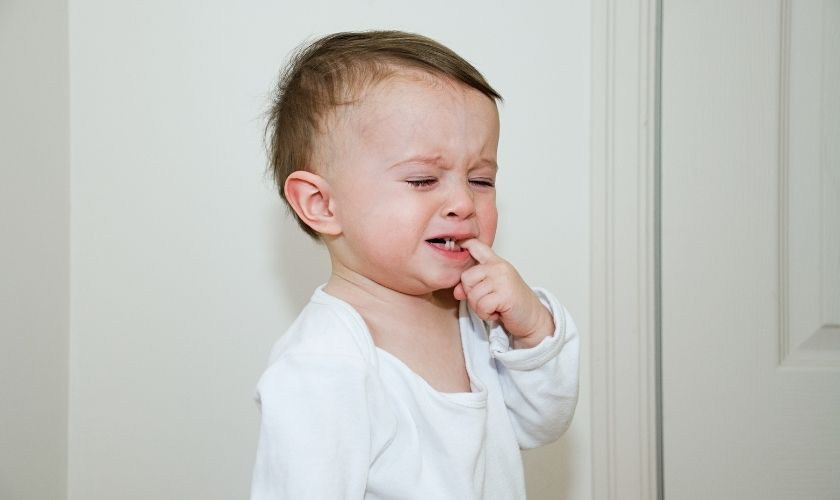
Teething can be uncomfortable for babies and stressful for parents. Common symptoms include:
- Swollen or tender gums
- Increased drooling
- Irritability or fussiness
- Chewing on objects
- Mild sleep disruption
- Reduced appetite
Some parents also notice slight gum redness around the erupting tooth. However, high fever, vomiting, or severe diarrhea are generally not caused by teething and may require medical attention.
Tips for Soothing Teething Discomfort
Parents can help relieve teething discomfort with simple at-home methods:
- Gently massage the gums with a clean finger
- Offer a chilled teething ring
- Use a cold, damp washcloth for chewing
- Wipe drool frequently to prevent skin irritation
- Provide age-appropriate teething toys
Avoid placing teething tablets or gels in a child’s mouth unless recommended by a healthcare professional.
Why Baby Teeth Matter
Some parents think baby teeth are less important because they eventually fall out. However, primary teeth are essential for healthy development. They help children:
- Learn proper speech patterns
- Chew and eat comfortably
- Maintain space for adult teeth
- Develop jaw structure
- Build healthy oral habits early in life
Neglecting baby teeth can lead to decay, pain, and future orthodontic concerns. Maintaining good oral hygiene from infancy is important for long-term dental health.
Caring for Baby Teeth
Good dental habits should begin even before the first tooth appears. Parents can gently clean an infant’s gums using a soft cloth after feedings. Once teeth erupt, brushing should begin with a small toothbrush and a tiny smear of fluoride toothpaste.
As children grow, regular dental checkups become an important part of preventive care. Early visits allow dentists to monitor tooth eruption patterns and identify any concerns before they become more serious.
Families looking for an experienced orthodontist in Bakersfield often benefit from early evaluations that help monitor jaw growth and tooth alignment during childhood.
When to See a Dentist
Parents should schedule a dental visit by the child’s first birthday or within six months after the first tooth appears. Early dental visits help establish healthy habits and allow professionals to monitor oral development.
You may also want to consult a dentist if:
- Teeth are significantly delayed
- Teeth appear discolored
- Your child experiences severe pain
- Teeth erupt in unusual positions
- There are signs of decay or damage
At Sturz & Abby, families receive guidance on pediatric dental care, teething concerns, and monitoring the healthy development of children’s smiles.
Supporting Healthy Smiles in Bakersfield
Every child develops at their own pace, but understanding the order of baby teeth coming in helps parents feel more prepared during the teething years. Monitoring eruption patterns, maintaining good oral hygiene, and scheduling regular dental visits can support healthy oral development from infancy through childhood.
Frequently Asked Questions
1. What is usually the first baby tooth to come in?
The lower central incisors are typically the first teeth to erupt, usually between 6 and 10 months of age. These are the two bottom front teeth.
2. How long does teething last for babies?
Teething may continue from infancy until around age 3 as all 20 baby teeth erupt. Symptoms often come and go with each new tooth.
3. Is it normal for baby teeth to come in late?
Yes, some children develop teeth later than others. Genetics, nutrition, and growth patterns can affect eruption timing without causing concern.
4. Can teething cause fever in babies?
Teething may slightly raise body temperature, but high fever is not considered a normal teething symptom and may indicate another illness.
5. How should parents clean baby teeth?
Parents should use a soft toothbrush with a small amount of fluoride toothpaste to gently clean baby teeth twice each day.
6. When should children first visit a dentist?
Children should usually visit a dentist by their first birthday or within six months after the first tooth appears in the mouth.
7. Why are baby teeth important if they fall out?
Baby teeth help children chew, speak clearly, and hold space for adult teeth, supporting healthy jaw and dental development.